Greece · · 6 min
Investing in a hotel in Greece: yields, structures and incentives
Record visitor numbers, rising deal volumes and generous investment aid: Greek hospitality is drawing capital. Here is how to think about returns, ownership structures, licences and exit before you buy.
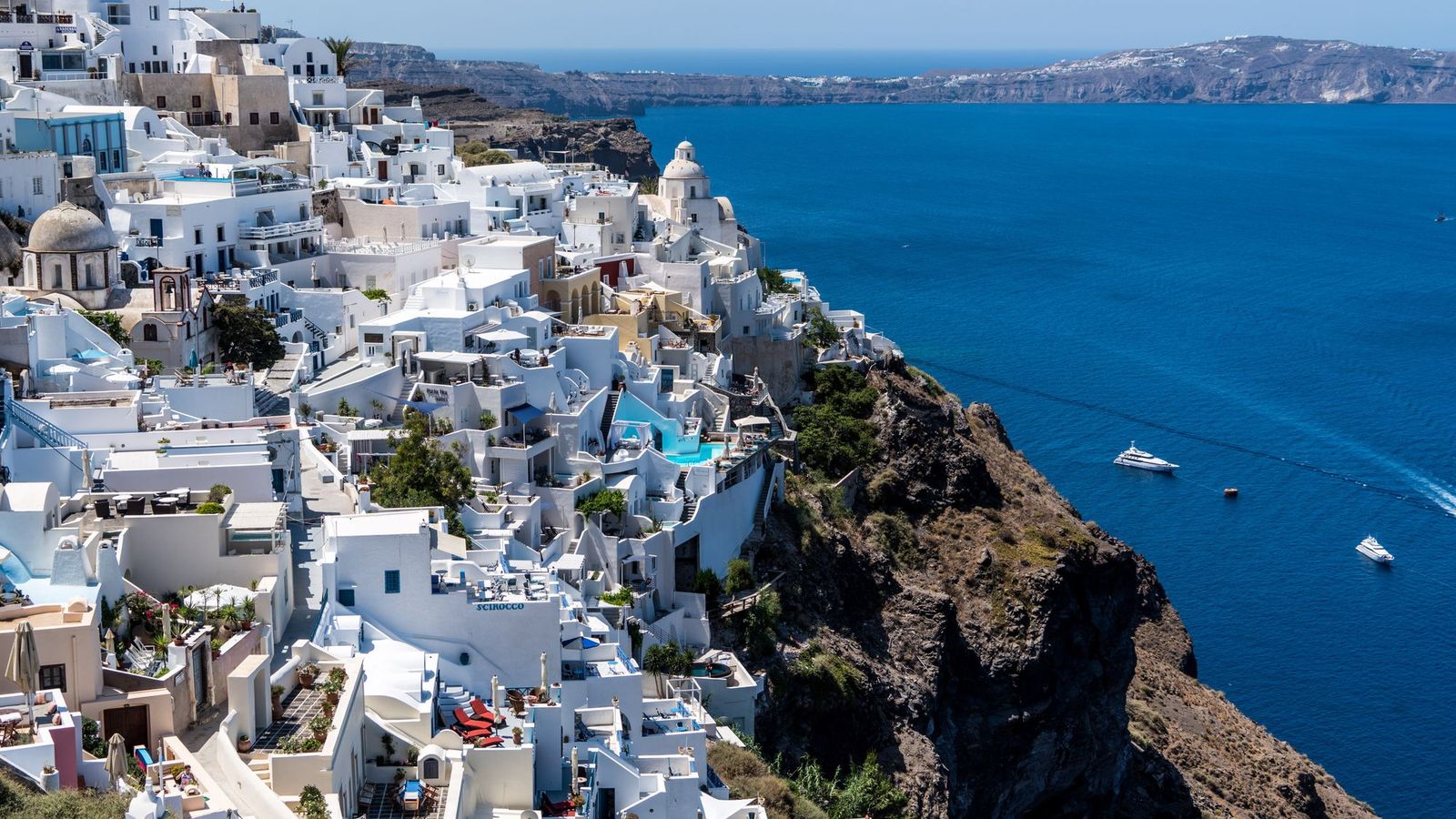
To invest in a hotel in Greece is to buy a building and a trading business at the same time, in a country that set a new tourism record in 2025. The opportunity is genuine, but returns depend above all on location, seasonality, the operating model and the quality of the due diligence carried out before purchase. This guide draws on figures from the Bank of Greece, INSETE and leading industry studies, then walks through structures, licensing and the incentives on offer.
The Greek hospitality market in 2025–2026
Provisional Bank of Greece data show around 38 million international visitors in 2025 (up 5.6% year on year) and travel receipts of roughly €23.6 billion (up 9.4%). INSETE, the research arm of the Greek Tourism Confederation, reports the same order of magnitude excluding cruise traffic.
On the hotel side:
- ITEP, the research institute of the Hellenic Chamber of Hotels, puts hotel capital spending at about €1.5 billion in 2025, up from €1 billion in 2024, with sector turnover close to €12.5 billion;
- the HVS European hotel transactions report puts Greek deal volume at around €1.1 billion in 2025, ranking Greece among Europe's top five markets, helped by a few landmark deals such as the sale of the remaining stake in the Astir Palace at Vouliagmeni;
- according to the Chambers 2026 practice guide on Greece, roughly 40% of new hotel projects involve a major international operator.
The government is targeting 50 million visitors and €27 billion of receipts by 2030. None of this removes the risks: heavy reliance on the summer months, rising energy and staff costs, and capacity strain on some of the busiest islands.
Which kind of hotel to buy
Greek hotel assets fall into a few broad families, each with its own risk profile:
| Asset type | Season | Profile |
|---|---|---|
| City hotel in Athens or Thessaloniki | Year-round | Steadier income, competition from short-term lets |
| Boutique hotel in the Cyclades (Mykonos, Santorini, Paros) | 5 to 7 months | High price per key, strong land value, short season |
| Beach resort in Crete, Rhodes or the Peloponnese | 6 to 8 months | Larger volumes, often branded or under third-party management |
| Repositioning play (former family hotel, building to convert) | Varies | Value-add potential, higher works and licensing risk |
For private investors, the boutique hotel of 15 to 40 keys remains the most sought-after format: a manageable ticket, the option of family or third-party management, and reasonable liquidity on resale. We present the assets we are tracking on our page of boutique hotels for sale in Greece.
What returns can you expect?
Greek hotel deals almost never disclose entry yields. The ranges below circulate in market commentary and should be read as indicative orders of magnitude, not as a forecast:
- upscale city hotel in Athens: around 6% to 7.5% net initial yield;
- stabilised resort or boutique hotel on a prime island: around 5% to 7%, with high land values compressing the yield;
- four-star beach hotel outside the hotspots: often 7% to 10%, in exchange for greater operating risk.
Actual performance hinges on occupancy, average daily rate, length of season, payroll and the refurbishment budget. A hotel is not a buy-to-let: it is an operating company, and the last three years of trading accounts matter as much as the location.
Ownership structures: IKE, AE and operating models
Most hotels are held through a Greek company:
- IKE (private capital company, broadly comparable to a UK private limited company): nominal minimum capital, quick registration with the GEMI business registry, well suited to smaller properties;
- AE (public limited company or société anonyme): minimum capital usually quoted at €25,000, more formal but favoured for larger assets and bank financing.
Corporate income tax is 22%, and hotel accommodation carries a reduced VAT rate of 13%. There are two ways to acquire:
- asset deal (buildings plus business): notarial deed, 3.09% transfer tax on an operating hotel, registration with the cadastre;
- share deal (buying the owning company): usually no transfer tax, but you inherit every liability, hence the need for in-depth due diligence.
Then comes the operating model: owner-operated, a management agreement with an operator (often 5 to 20 years), a lease to an operator (10 to 20 years) or a brand franchise, with royalties commonly between 4% and 8% of revenue according to the Chambers 2026 guide.
Licensing and star rating
Opening a hotel in Greece requires an electronic notification of operation to the Ministry of Tourism (successor to the former GNTO/EOT), once planning compliance and building permits have been confirmed. The star classification, issued by the Hellenic Chamber of Hotels, completes the process. When buying, check that the category, bed count and floor areas in use match the permits exactly; otherwise operations can be suspended.
Financing and state incentives
Greek banks lend against hotels, typically with significant equity and security over the property, furniture and leases. Other sources include bond loans, mezzanine debt, private equity and loans backed by the EU Recovery and Resilience Facility (RRF).
Two public schemes are worth knowing:
- the Development Law 4887/2022, reformed in 2025, which supports new hotels, extensions and upgrades through tax exemptions, cash grants and leasing subsidies; aid intensity varies by region, company size and funding call, and can be substantial in less developed areas;
- the Strategic Investments Law (4864/2021), reserved for large projects, generally above €20 million: fast-track licensing, tax stability and possible grants.
Funding calls open in cycles, and the application must generally be filed before works begin. Have eligibility confirmed by a specialist adviser.
Due diligence before you sign
A proper hotel due diligence covers at least:
- Legal: title, cadastre, easements, coastal zone, any archaeological or forestry constraints.
- Planning: compliance of built areas, past legalisations, remaining building rights.
- Operations: three to five years of accounts, occupancy, average rate, distribution channels, staff contracts (the buyer is liable for earlier employment debts).
- Technical: building condition, pools, utilities, energy performance, capex budget.
- Regulatory: licences, star rating, fire and accessibility standards, foreign investment screening in border regions.
Plan the exit from day one
Selling a hotel is easier with a recognised brand, clean accounts, a well-maintained building and an unqualified licence; these attract institutional investors and operators. Selling the company rather than the property can be tax-efficient, but the buyer will ask for the same level of diligence. If residency is also part of your plans, read our article on the Greece golden visa 2026 thresholds.
For more on how we work, see our dedicated page on hotel investment in Greece. If a private villa appeals more than a hotel, read our guide on buying a villa on Mykonos, and compare other markets on our luxury property investment in Europe page. To review a specific opportunity, contact our team.
Frequently asked questions
How much do I need to invest in a hotel in Greece?
Prices vary widely. A small property on the mainland or a quieter island generally costs far less than a boutique hotel on Mykonos or Santorini, where land value weighs heavily. We work in price per key and yield, comparable by comparable, and add transfer tax, due diligence and usually a refurbishment budget.
What yield is realistic?
Indicative ranges run from roughly 5% to 10% net depending on asset type and location. No return is guaranteed: it depends on operations, season length and capital works.
Do I need a Greek company?
In most cases, yes: an IKE for smaller properties or an AE for larger assets. The right choice also depends on tax rules in your country of residence, so take advice from a lawyer and a tax specialist.
Are grants available?
Yes. Development Law 4887/2022 offers aid for new or upgraded hotels through periodic funding calls. Rates vary by region and project, and the application usually has to precede the works.
Is it better to buy the property or the company?
A share deal generally avoids transfer tax but carries over all liabilities. An asset deal is cleaner but costs more in tax. The choice is made after due diligence.
Go further: Hotel investment in Greece: boutique hotels and resorts